




Now Reading: Chintamani Lokeshwar Returned Home : Nepal Welcomes Back Sacred Treasures After 45 Years
-
01
Chintamani Lokeshwar Returned Home : Nepal Welcomes Back Sacred Treasures After 45 Years
Chintamani Lokeshwar Returned Home : Nepal Welcomes Back Sacred Treasures After 45 Years

There is a profound sense of healing when a precious piece of a nation’s art (a soul ), long thought lost, finally finds its way back to the soil where it was created. After nearly half a century, three ancient Nepali artifacts have completed an incredible journey from the United States back to their rightful home in the heart of Kathmandu.
A Mystery Solved Across Decades
The story began on a somber night, September 14, 1980, when three sacred thangkas—traditional Buddhist scroll paintings—were stolen from the Paravat Mahavihar in Itumbahal. For decades, their whereabouts remained a mystery, until 2003 when an art enthusiast named Stephen Eckard recognized them at the Art Institute of Chicago.
This discovery set off a multi-year effort to bring the treasures home. Through the coordinated work of Nepal’s Department of Archaeology, the Newa Guthi in the U.S. (led by Bijay Man Singh), and international supporters, the artifacts finally returned to Nepal on March 2, 2025.
Meeting the Masterpieces
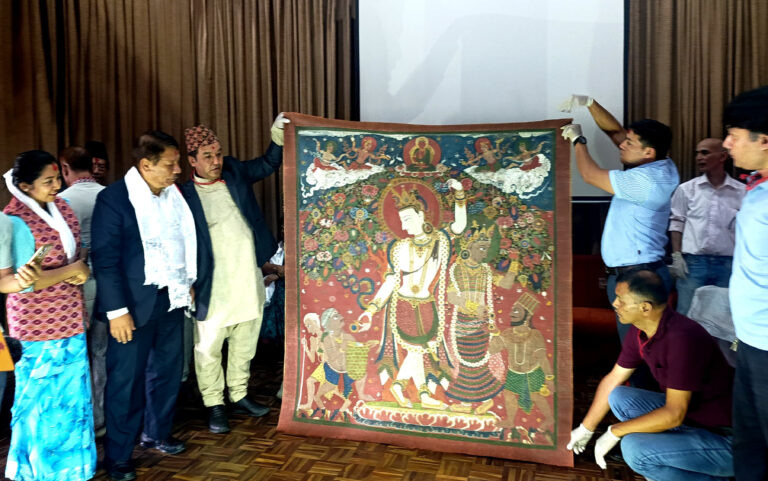
These are not merely paintings; they are ancient mirrors reflecting Nepal’s rich spiritual history. Created on cotton or silk using vibrant mineral and organic pigments, the repatriated items include:

- The Chintamani Lokeshwar: A stunning 300-year-old depiction of a revered deity.
- The Bhairav and Keshachandra: A 321-year-old representation of these significant figures.
- The Gagan Singh Bharo Thangka: The oldest of the group, a 575-year-old piece featuring Gagan Singh Bharo and his wife.
Restoring Tradition at Itumbahal
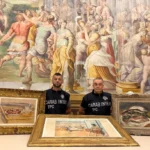
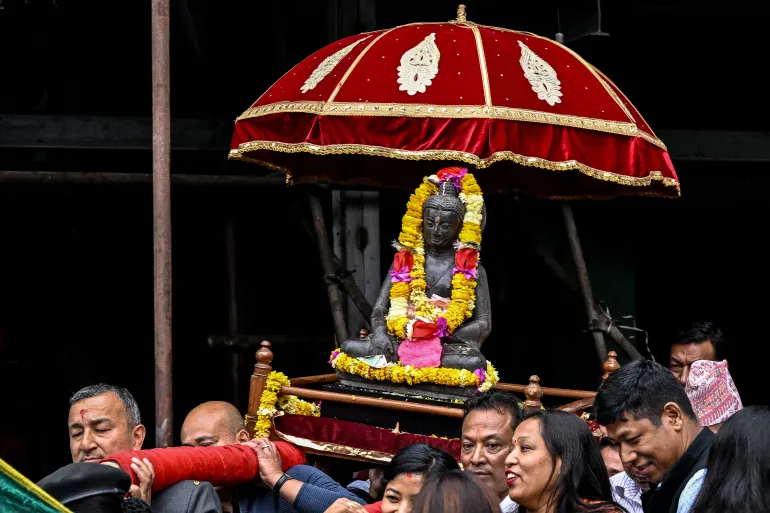
On July 26, 2025, a ceremonial handover took place at the National Museum of Nepal. Attended by Deputy Prime Minister Prakash Man Singh, the artifacts were formally transferred to the Keshachandra Mahavihar Conservation Society.
Before their theft in 1980, it was a tradition to display these thangkas for 15 days during the Gula festival. Now, thanks to the establishment of a dedicated museum at the Mahavihar, that tradition can finally breathe again.
A Bridge to the Future
This successful repatriation is part of a growing movement to bring Nepal’s scattered heritage home, ranging from stone sculptures to historical manuscripts. As Deputy Mayor Sunita Dangol and other leaders noted, these artifacts are more than just museum pieces; they are historical links for future generations.
When we see these 500-year-old pigments catching the light in Kathmandu once more, we are reminded that heritage is the compass of a culture. Returning these stolen artifacts is like finding the missing pages of a family’s oldest storybook; without them, the narrative of the past remains incomplete, but with them, the path to the future becomes clear.


Krishna Paksha Thapa (KANXEY) is an art lover, illustrator, and storyteller from Nepal (Now in Israel). An independent creator who loves to write and paint, he brings stories to life through sketches, words, and visual expression.