












Now Reading: Raid Exposes Cambodia’s Bizarre ‘Digital Arrest’ Scam Centers
-
01
Raid Exposes Cambodia’s Bizarre ‘Digital Arrest’ Scam Centers
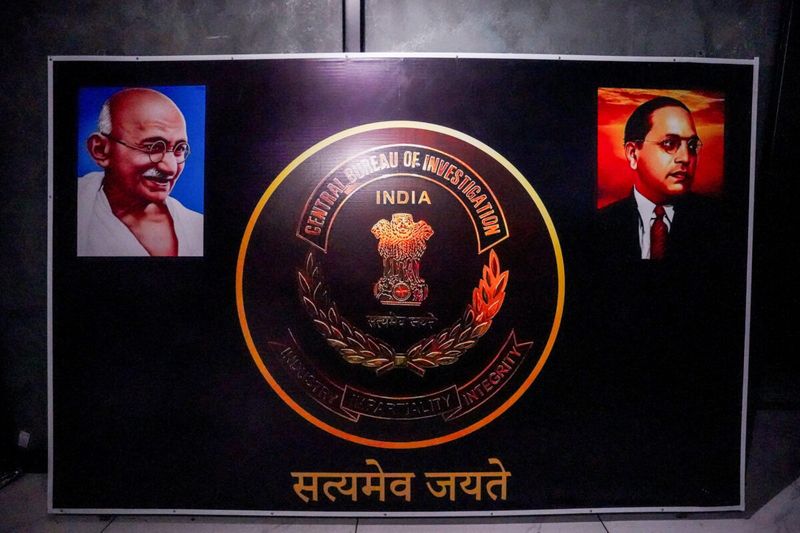

Imagine walking into a quiet room deep in the heart of Kampot province, Cambodia. You see the familiar, serene face of Mahatma Gandhi looking down from a portrait; the Indian Tricolour hangs with apparent pride nearby. At first glance, you might think you’ve stumbled into a local embassy or a police station in Delhi. But look closer, and the illusion shatters.
This isn’t a place of law and order. It is a sophisticated stage for the “digital arrest” scam—an elaborate piece of theater designed to swindle the unsuspecting out of their life savings.
An Oil Painting of Gandhi Sells for $204,000
The Great Crackdown
In a series of sweeping moves, Cambodian authorities have begun pulling back the curtain on a massive network of transnational fraud. According to senior government officials, nearly 190 scam centers have been sealed off in recent weeks. This crackdown marks a significant shift for a country that has long faced international pressure to address its growing reputation as a hub for cybercrime.
The scale of the operation is staggering. Since late last year, authorities have arrested 173 senior crime figures and deported roughly 11,000 workers. The catalyst for this sudden momentum was a high-profile international move: the U.S. indictment and subsequent Chinese extradition of a notorious alleged scam kingpin.

Inside ‘My Casino’
Reporters were recently granted a rare glimpse inside a sprawling complex known as “My Casino,” located near the Vietnam border. What they found was a factory of fraud. Rows upon rows of computer stations were cluttered with documents—scripts and instructions meticulously detailing how to manipulate and scam victims.
Perhaps most chilling were the studio booths. Here, scammers would pose in front of fake backdrops, dressed as Indian police officers, using the portraits of Gandhi and the national flag to build a facade of authority. These “digital arrests” involve convincing victims they are under investigation for serious crimes, using fear and the “official” setting to extort money.
A Humanitarian Crisis in the Making
While the narrative often focuses on the “criminals,” there is a darker, more tragic side to these compounds. Many of the workers are themselves trafficking victims, held in brutal conditions and forced to scam others under threat of violence.
When the alleged boss of the Kampot complex, tycoon Ly Kuong, was arrested, the sheer scale of the operation became clear. As police moved in, an estimated 6,000 to 7,000 workers fled the site. The local police chief, Mao Chanmothurith, admitted that his forces—totaling only about 1,300 officers—simply could not stop the human tide. Amnesty International has described this mass flight as a “humanitarian crisis,” as thousands of people now struggle to find a way home.
For years, the existence of these compounds was played down by officials, but the latest campaign appears broader in scope, focusing on the “big fish” and the permanent closure of these sites. Similar setups have been discovered along the Thai border, featuring fake police stations designed to target multiple nationalities.
The discovery of Indian national symbols in a Cambodian scam den serves as a haunting reminder of how far these criminal networks will go to exploit trust. As the digital world expands, so does the ingenuity of those looking to subvert it. The walls of “My Casino” may have been closed, but the shadow world of transnational fraud remains a global challenge that requires more than just local police to dismantle.


Krishna Paksha Thapa (KANXEY) is an art lover, illustrator, and storyteller from Nepal (Now in Israel). An independent creator who loves to write and paint, he brings stories to life through sketches, words, and visual expression.