







Now Reading: Inside, The Valley Sings – Animation Documentary
-
01
Inside, The Valley Sings – Animation Documentary


Beyond the Four Walls: A Review of “Inside, the Valley Sings”
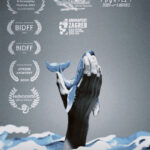
In the quiet, harrowing space of a 15-minute animated documentary, Irish filmmaker Nathan Fagan invites us into a world most of us will never see—and one we hope to never experience. His latest work, Inside, the Valley Sings, is the result of two years spent interviewing those who lived through the crushing silence of solitary confinement.
Rather than focusing on the legalities of their cases or the specifics of their imprisonment, Fagan shifts his lens toward a more profound, philosophical inquiry: How far can a state go in its punishment and still be considered humane?. Through the firsthand accounts of Kiana Calloway, Sunny Jacobs, and Frank de Palma, the film provides a clear, resonant answer: long-term solitary confinement is never the solution,.
The Architecture of the Mind
The film is masterfully economical, moving between the three narrators who once occupied the same cramped 6×9 reality,. Initially, we see the mundane “minutiae” of their cells—the aimless pacing and the hyper-focus on small details. However, as the walls begin to press inward, the film beautifully captures the human spirit’s refusal to be contained.
The narrators begin to escape into their own cinematic fantasies. It is here that the medium of animation, guided by director Natasza Cetner, truly shines,. Animation is uniquely capable of visualizing the invisible; it brings to life the vibrant internal worlds that kept these individuals sane.

A Contrast of Color and Shadow
The visual narrative is a striking study in contrasts:
- The Reality: The prison walls and corridors are rendered in detailed, black-and-white sketches, creating a sense of stark, airless confinement.
- The Escape: These sketches are juxtaposed against vivid, colorful scenes of cartoon pirates, playful dogs, and grocery-store dates.
- The Human Form: The bodies of the inmates are shown as rotoscoped shapes, often without visible limbs, unified by their orange uniforms. Yet, their faces remain hauntingly real and familiar, as if they are desperately “holding on to their thoughts”.
A Powerful Testament
Inside, the Valley Sings serves as a “powerful testament of humanity gone haywire”. It suggests that when the physical world is reduced to a tiny box, reality and fantasy become two sides of the same coin.
The film ends on a poignant note. In the final shot, the participants choose to leave the animated space, effectively leaving the audience alone inside the cell. This final act is a firm reminder to the viewer to remain aware of the ethical and mental limits of our justice systems and to witness the resilience required to survive them.
Directed by: Nathan Fagan
Animation Director: Natasza Cetner
Producer: Seamus Waters
Production Company: Wonderbread
Original Score: Die Hexen
Sound Design: Die Hexen
Post-Production Audio: Sound Canvas
Funded by: The Arts Council of Ireland / An Chomhairle Ealaíon
Fiscal Sponsorship Provided by: International Documentary Association (IDA)
Rotoscoping Camera Operator: Kevin Minogue
Rotoscoping Models: Tony Doyle / Olwen Jennings / Aaron Katambay / Ellie-Mai Sutton
Blender Mentoring: Richard Noble


Krishna Paksha Thapa (KANXEY) is an art lover, illustrator, and storyteller from Nepal (Now in Israel). An independent creator who loves to write and paint, he brings stories to life through sketches, words, and visual expression.