






Now Reading: Playing God: The 7-Year Masterpiece That Redefines Stop-Motion Horror
-
01
Playing God: The 7-Year Masterpiece That Redefines Stop-Motion Horror

Playing God: The 7-Year Masterpiece That Redefines Stop-Motion Horror
In the world of modern cinema, where digital effects can conjure entire worlds in weeks, there is something profoundly moving about the “meticulous slowness” of stop-motion animation. Playing God, a Italian-French short film directed by Matteo Burani, stands as a testament to this patient artistry. Taking seven long years to complete, this nine-minute film is more than just a horror short; it is a “visceral gut punch” that explores the very essence of identity and belonging.
A Herculean Effort in Clay
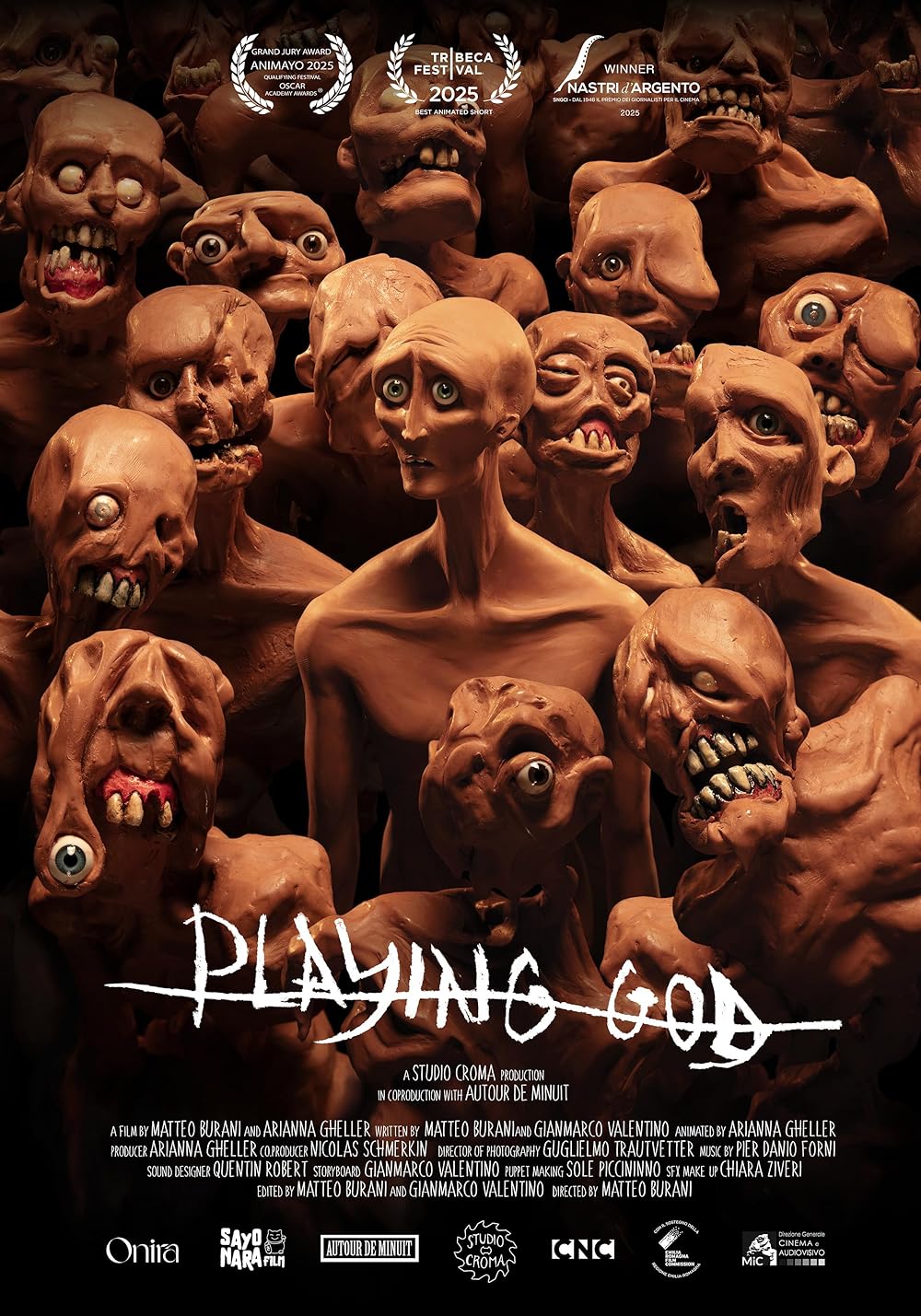
The journey to bring Playing God to the screen was nothing short of a “masochistic enterprise” undertaken by Burani and his partner at Studio Croma, Arianna Gheller. To achieve its hauntingly realistic atmosphere, the team utilized a complex blend of puppet, clay, and pixilation animation.
The level of detail is staggering:
- Over 60 different models were used in motion.
- Characters were detailed with real tears and saliva to enhance their “visceral” presence.
- Production moved at a snail’s pace, with days passing just to complete a handful of frames.
The Story: A Workshop of Failed Dreams
The narrative unfolds in the dim light of a sculptor’s workshop, a setting inspired by the “figurative intensity” and lighting of masters like Caravaggio and Goya. We watch as a Sculptor—presented mostly as distant, unknowable hands—obsessively shapes a clay figure into “living flesh”.

As the creation comes to life, the wonder of its birth is quickly eclipsed by a “darkly cruel” reality. The new being realizes it is surrounded by a “menagerie” of disfigured, abandoned versions of itself—past failures of a creator seeking an impossible perfection. This creates an atmosphere of existential horror, as the creature yearns for a connection with a “divine” creator who sees it only as another flawed experiment.
From Horror to Hope: A Meaningful Shift
While the film’s “visceral and experimental” form captures the horror of rejection, its true meaning lies in a “fragile optimism”. Director Matteo Burani describes the work as a treatise on what happens after a creation is judged or cast aside.
Rather than focusing solely on the “creator/creature binary,” the film highlights the power of community. The gallery of disfigured sculptures is not a graveyard, but a “source of strength”—a community forged through shared abandonment. It is a beautiful exploration of the human condition: finding belonging not with those who made us, but with those who truly understand our struggle.
A Critical Triumph
The film’s “Herculean effort” has not gone unnoticed by the global film community. Since its release, Playing God has become a powerhouse on the festival circuit, earning several prestigious honors:
- Best Animated Short at the Tribeca Film Festival (an Oscar-qualifying win).
- The Grand Prize at the Animayo International Film Festival.
- The FEDIC Award at the Venice International Film Festival.
Why You Should Watch
Playing God is a rare piece of craft that exceeds its technical brilliance to touch something deeply human. It asks the haunting questions at the heart of our existence: Why are we here, and what is the price of yearning to be free?. Whether you are a fan of high-art animation or simply looking for a story that stays with you long after the credits roll, this 9-minute masterpiece is a “visceral viewing experience” that you cannot afford to miss.


Krishna Paksha Thapa (KANXEY) is an art lover, illustrator, and storyteller from Nepal (Now in Israel). An independent creator who loves to write and paint, he brings stories to life through sketches, words, and visual expression.