








Now Reading: Stolen Masterpieces Worth Millions Turn Up in a Cardboard Box in Italy
-
01
Stolen Masterpieces Worth Millions Turn Up in a Cardboard Box in Italy
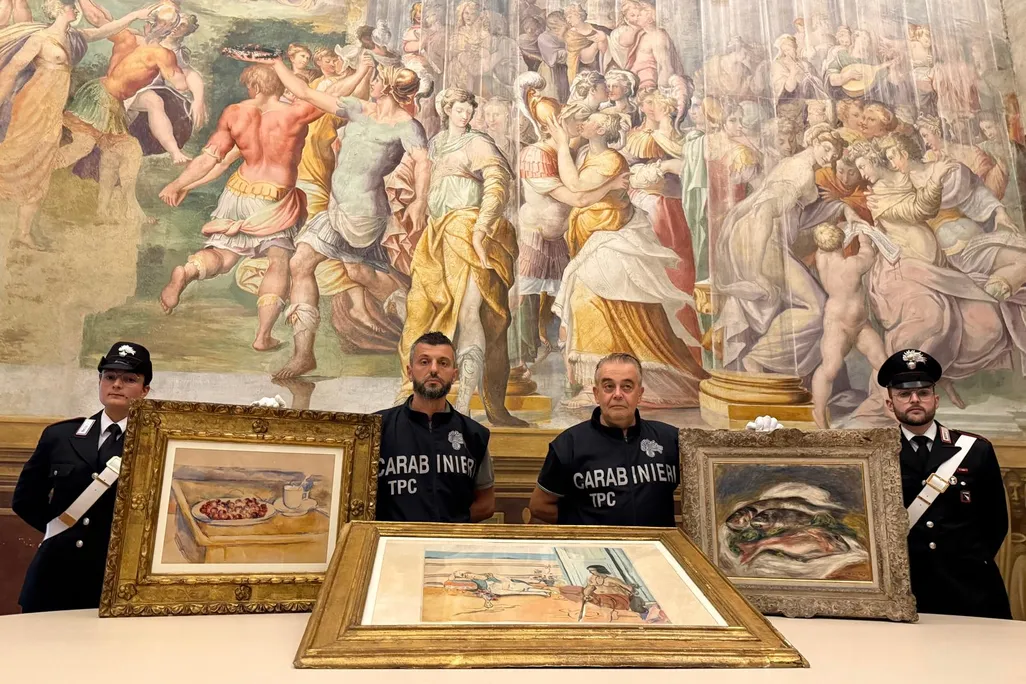
Stolen Masterpieces Worth Millions Turn Up in a Cardboard Box in Italy

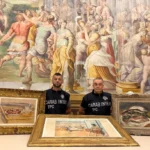
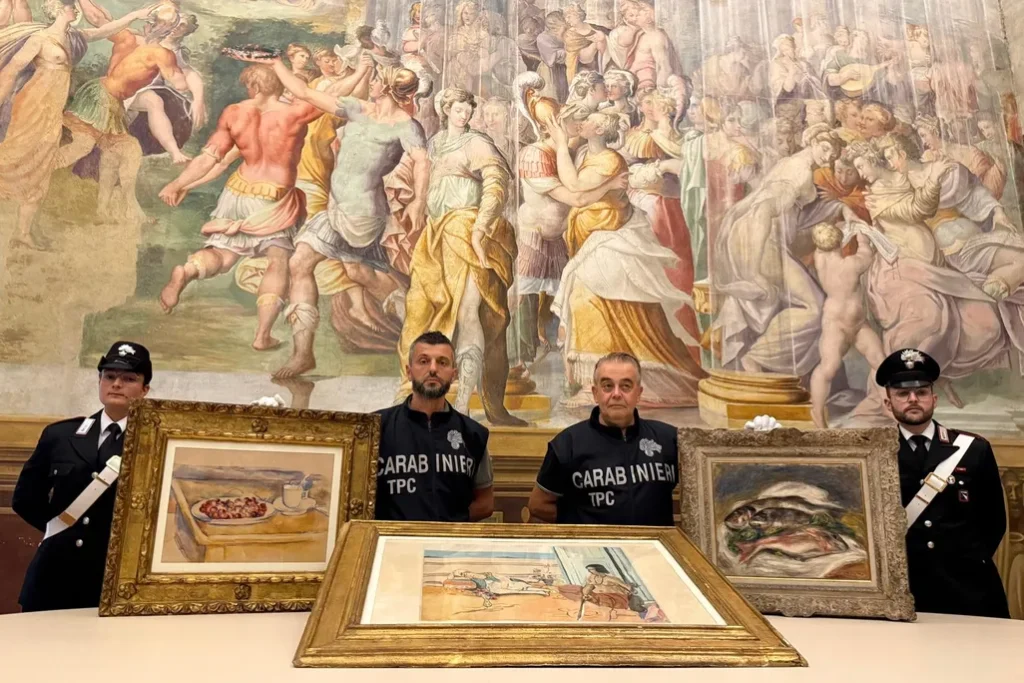
In a twist that sounds almost too strange to be true, Italian police have recovered three world-famous paintings — stolen from a museum in a heist that took just three minutes — hidden inside an ordinary cardboard box in a house in Parma.
It’s the kind of story that makes even seasoned art-crime investigators shake their heads. Italy’s Carabinieri, working through a specialized cultural heritage unit, tracked down and recovered Paul Cézanne’s “Tasse et Plat de Cerises” (Cup and Plate of Cherries), Henri Matisse’s “Odalisque sur la Terrasse,” and Pierre-Auguste Renoir’s “Les Poissons” (The Fish) — three paintings whose combined value runs into the millions of euros.
The works had vanished from a museum in northern Italy months earlier, in a burglary so fast it barely registered on security footage before the thieves were gone. Investigators say the entire operation — breaking in, locating the paintings, and escaping — took roughly three minutes. That kind of speed and precision immediately raised questions about inside knowledge, and it sent a ripple of anxiety through museum security departments across Europe, many of which began quietly reviewing their own protocols in the weeks that followed.
After months of painstaking detective work, investigators finally traced the trail back to an unremarkable residential property in Parma. What they found there surprised almost everyone: no hidden vault, no elaborate concealment system — just a plain cardboard box tucked away in the house, containing three paintings worth a small fortune. For most people, the image of Cézanne and Matisse stuffed into a box like forgotten holiday decorations feels almost comic. But art-crime specialists say this is actually far more common than the public assumes.

Famous, well-documented paintings are essentially impossible to sell on the open market — any reputable auction house or dealer would recognize them instantly, and even the black market treats major stolen works with caution. As a result, thieves often end up simply sitting on their haul, sometimes for years, waiting for a buyer who may never materialize. Ironically, an expensive, secure hiding place can actually attract more suspicion than a nondescript box in an ordinary home. Investigators note that some of the most significant recovered artworks in history have turned up in similarly humble locations — attics, storage units, even under beds.
Alongside the recovery, several people believed to be connected to the theft have reportedly been taken into custody, though the investigation remains ongoing and authorities have released few additional details. Art theft is a bigger business than most people realize: Interpol estimates the illicit trade in stolen cultural property generates billions of dollars annually, ranking it among the largest categories of transnational organized crime, alongside drug and arms trafficking. Yet unlike those trades, stolen art is rarely destroyed — its value depends entirely on its authenticity and history, which gives investigators a fighting chance of eventual recovery, sometimes decades later.
The Parma case has reignited a familiar conversation in the museum world: security budgets. Smaller institutions, in particular, often lack the layered alarm systems, motion sensors, and rapid-response protocols that larger, internationally renowned museums can afford. Security consultants say the lesson from this heist isn’t really about the box — it’s about the three-minute window. Modern museum security increasingly depends on real-time monitoring, AI-assisted surveillance, and tightly rehearsed response plans that can close that window before thieves ever get near the walls.
The recovered paintings are now undergoing careful authentication and condition assessment by conservation experts before any decision is made about their return. Museum officials have expressed cautious optimism that, once verified, the works will go back on public display at their original home — a small but meaningful victory in a field where recovered masterpieces are the exception rather than the rule. For now, the case stands as both a reminder of how vulnerable even celebrated artworks can be, and a rare, satisfying example of a story with a genuinely happy ending.

Krishna Paksha Thapa (KANXEY) is an art lover, illustrator, and storyteller from Nepal (Now in Israel). An independent creator who loves to write and paint, he brings stories to life through sketches, words, and visual expression.