






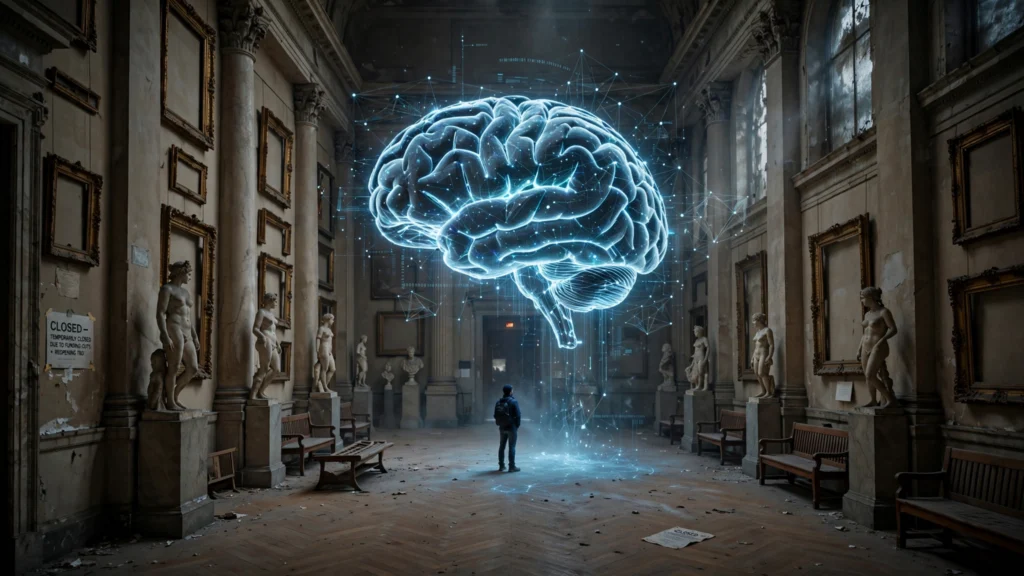











Profiles of the visionaries looking past individual models to construct the macro-systems of tomorrow.

In the rapid evolution of artificial intelligence, a distinction has emerged between the mechanics of machine learning and the architecture of intelligence. While thousands of talented engineers spend their days optimizing hyperparameters, pruning transformer layers, and refining pipelines, another class of leader operates at a different altitude entirely: The AI Architect.
The AI Architect is not merely a chief technologist or an algorithmic researcher. They are systems philosophers and technological cartographers. Operating with a visionary, big-picture perspective, they connect disparate nodes—compute economics, cognitive science, geopolitical tension, infrastructure scaling, and socio-philosophical ethics—into a unified trajectory for the modern era.
The Anatomy of the Visionary Mindset
What differentiates the big-picture thinker from the functional technologist? It comes down to scope, horizon, and synthetic thinking.
- Second- and Third-Order Thinking: While a developer considers model latency, the architect asks: How does real-time inference at near-zero cost restructure enterprise communication frameworks over the next decade?
- Cross-Disciplinary Synthesis: They borrow ideas freely from biology, distributed systems, economics, and linguistic philosophy to imagine non-traditional compute paradigms.
- Infrastructural Foresight: An appreciation that intelligence is bounded by hardware, energy, and thermodynamics. They see model intelligence as a byproduct of electrical power, silicon logistics, and cooling systems.
“The engineer focuses on whether the model can solve the problem today. The architect asks what happens to society when a billion instances of that model run continuously tomorrow.”
— Archetype Paradigm: The Big-Picture Horizon
Profiles: Archetypes of the AI Architect
The visionary role in artificial intelligence manifests in several distinct archetypes across research institutions, industry titans, and philosophical foundations.
1. The Systems Builder
Focused on the colossal convergence of compute, energy, and hardware. They realize software is trivial without massive, scalable platforms. They design the physical bedrock upon which synthetic cognition lives.
2. The Cognitive Pioneer
Driven by neuroscience and fundamental discovery. This architect views AI not merely as a tool for automation, but as an empirical canvas to decode human consciousness and solve biology’s ultimate questions.
3. The Symbiosis Strategist
The humanist visionary. They ask how human workflows, agency, and organizational design adapt to non-human intelligence, ensuring AI acts as an intellectual exoskeleton rather than an existential replacement.
4. The Alignment Cartographer
The existential planner. They focus on governance, ethics, and control systems, charting safety barriers long before a system reaches dangerous autonomous agency.
Micro-Optimization vs. Macro-Architecture
To grasp the influence of the AI Architect, one must contrast the granular reality of software engineering with the systemic perspective of visionary design:
The Contrast in Elevation
The Micro-View: “How do we improve our benchmark score on GSM8k by 2.4% while decreasing GPU memory consumption during fine-tuning?”
The Macro-Architect View: “If synthetic reasoning hits human baseline parity in 24 months, what happens to traditional software development stacks, software licensing models, and the security architecture of the public internet?”
Designing for the Next Horizon
As the initial wave of foundation models settles into everyday consumer utilities, the role of the visionary becomes vastly more difficult—and crucial. The low-hanging fruit of raw parameter scaling is meeting physical bottlenecks: grid power availability, high-bandwidth memory limitations, and the exhaustion of high-quality public training data.
The next generation of AI Architects will not just be technical evangelists; they will be the ultimate integrators. They will design autonomous agent ecosystems, closed-loop scientific labs, and novel economic frameworks that allow human culture to flourish alongside synthetic reasoning.
In the grand theater of computing, algorithms are transient, but architectures endure. The future does not belong merely to those who write the code, but to the architects who sketch the blueprint for what that code is meant to build.