





Now Reading: ‘Lost In Mandala’: Nepal’s First Animated Feature Brings a Himalayan Story to the World
-
01
‘Lost In Mandala’: Nepal’s First Animated Feature Brings a Himalayan Story to the World
‘Lost In Mandala’: Nepal’s First Animated Feature Brings a Himalayan Story to the World

From Service Studio to Storyteller: How Nepal’s Incessant Rain Studios Is Taking ‘Lost in Mandala’ to the World
Kathmandu — For almost fifteen years, Incessant Rain Studios has been the quiet hand behind other people’s stories. Working out of Kathmandu, the studio has lent its animation and visual effects talent to more than 150 international film, television, and gaming projects — including HBO’s House of the Dragon and John Wick: Chapter 4. Now, it’s ready to tell one of its own.
That story is Lost in Mandala, Nepal’s first original animated feature film built for a global audience — and it marks a turning point for the studio, which is repositioning itself from a service provider into a full-fledged creative technology company built around original intellectual property.
A Story Rooted in the Himalayas
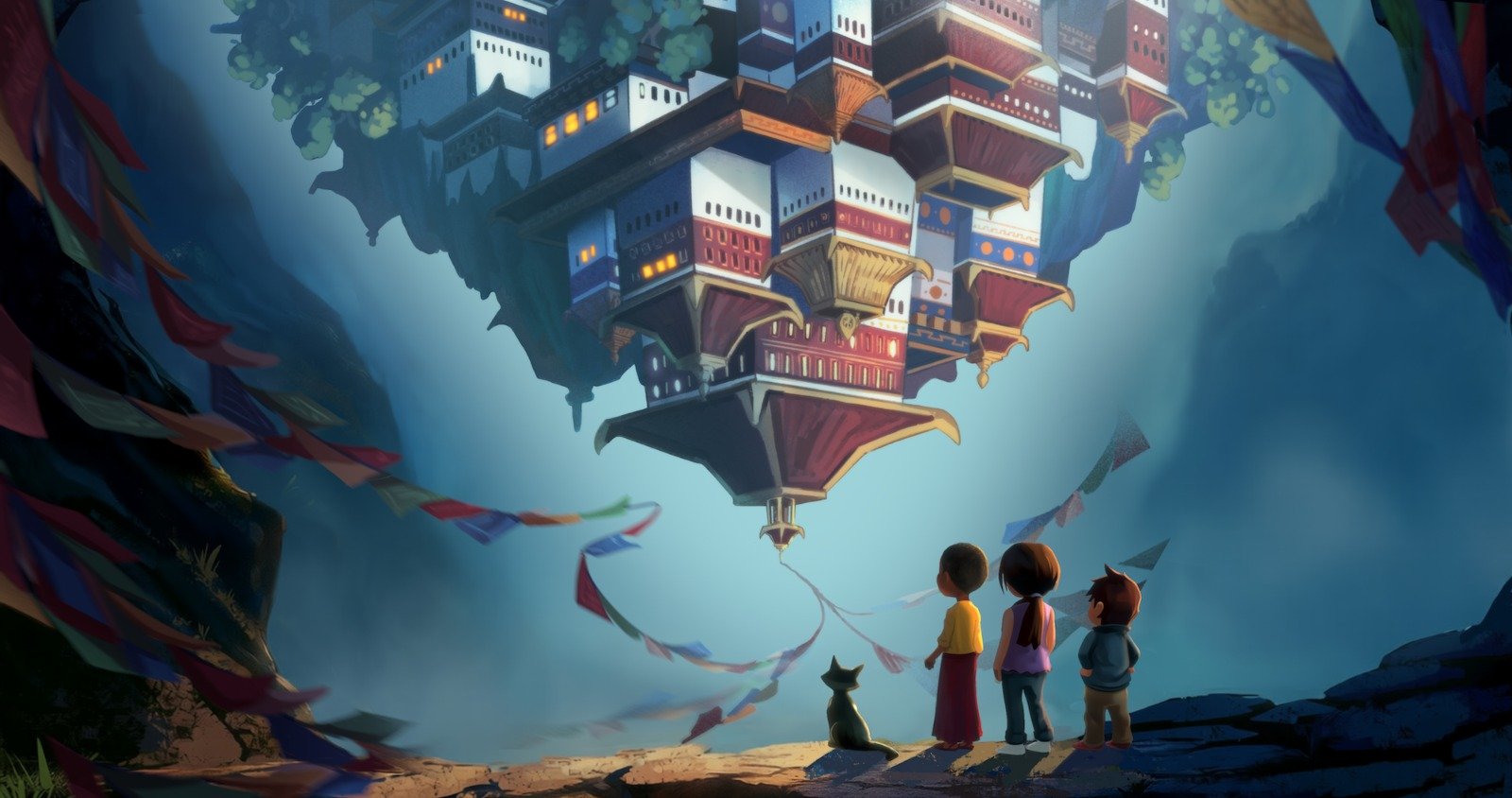
Lost in Mandala is a fantasy adventure centered on a twelve-year-old girl raised by Buddhist nuns in a Himalayan monastery. When she and her friends are unexpectedly pulled into a mysterious parallel world, they must face a sinister dark force threatening both realms. To save it — and their own — they’ll need to discover the strength of compassion, courage, and self-belief.
It’s a coming-of-age adventure built on a foundation unmistakably Nepali: the spiritual traditions, mythology, and landscapes of the Himalayas shape both the visual world and the emotional core of the film, even as its themes of friendship and self-discovery are designed to travel far beyond Nepal’s borders.

The Team Behind It
The film is directed by Kiran Bhakta Joshi, founder and co-CEO of Incessant Rain Studios, who spent 18 years at Walt Disney Studios as a Visual Effects Supervisor, working on films like The Lion King, Beauty and the Beast, and The Hunchback of Notre Dame. For Joshi, this project is personal — a chance to bring international filmmaking experience back home and tell a story rooted in his own culture.
The screenplay comes from Hollywood writer Zack Stentz, known for Thor, X-Men: First Class, and Netflix’s Jurassic World: Camp Cretaceous, among other film and TV credits. Deepa Chipalu Joshi, co-founder and co-CEO of Incessant Rain Studios and an Executive VFX Producer with credits including Yellowstone, Gangs of London, and The Hunger Games: The Ballad of Songbirds and Snakes, is producing the film and overseeing its international partnerships.
Building Nepal’s First IP-Driven Creative Company
Beyond the film itself, Lost in Mandala represents something bigger: an attempt to prove that original stories developed in Nepal can attract serious international investment and reach serious international audiences.
To back that ambition, NIMB Ace Capital has partnered with the studio to bring in institutional investment — one of the first major efforts of its kind in Nepal to channel large-scale capital into original creative content rather than service work. At a recent investor presentation at QFX Cinemas in Kathmandu, the studio pitched the film’s vision to prospective backers. NIMB Ace Capital CEO Shivanth B. Pandey framed the opportunity in terms bigger than a single release, noting that original IP can build lasting value through characters, stories, and brands that resonate across generations.
From Power Cuts to a Global Pitch
It’s worth pausing on how far the studio has come. Incessant Rain Studios started with a team of roughly 20 people, working through years of power cuts and limited resources. Today, it employs hundreds of artists and technologists across animation, gaming, visual effects, and emerging digital fields — making it one of Nepal’s most recognized creative technology companies.
On the distribution side, Apple Entertainment Pvt. Ltd. — one of Nepal’s leading theatrical distributors and the official partner for studios like Disney, Universal, Sony, Paramount, and Warner Bros. in Nepal — has signed on as the official distribution partner for Lost in Mandala in Nepal and select international territories. Apple Entertainment Chairman Nakim Uddin and Managing Director Bipashyana Shrestha both described the film as a chance to bring a culturally rooted, Nepal-born story to a wider stage through the company’s established theatrical network.
Why It Matters
Lost in Mandala is more than a single animated film — it’s a test case for what Nepal’s creative industry can become when it stops just serving other people’s productions and starts building its own. With an internationally experienced creative team, serious institutional backing, and a distribution partner ready to bring it to theatres, the studio is betting that a story born in the Himalayas can resonate anywhere.
If it succeeds, it won’t just be a win for one film — it could open a new chapter for animation and original storytelling in Nepal altogether.

Krishna Paksha Thapa (KANXEY) is an art lover, illustrator, and storyteller from Nepal (Now in Israel). An independent creator who loves to write and paint, he brings stories to life through sketches, words, and visual expression.