



Now Reading: Arts for Humanity: When Nepal’s Artists Answer a Disaster with Their Art
-
01
Arts for Humanity: When Nepal’s Artists Answer a Disaster with Their Art
Arts for Humanity: When Nepal’s Artists Answer a Disaster with Their Art

When disaster strikes, people respond in the ways they know best. Journalists carry the facts to us in reports, photographs and video. Artists do something quieter and just as important. They give the facts a feeling, and that feeling can stir a whole community to care and to act.
This month, Nepal’s artists are doing exactly that.
An Exhibition with a Purpose
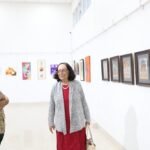
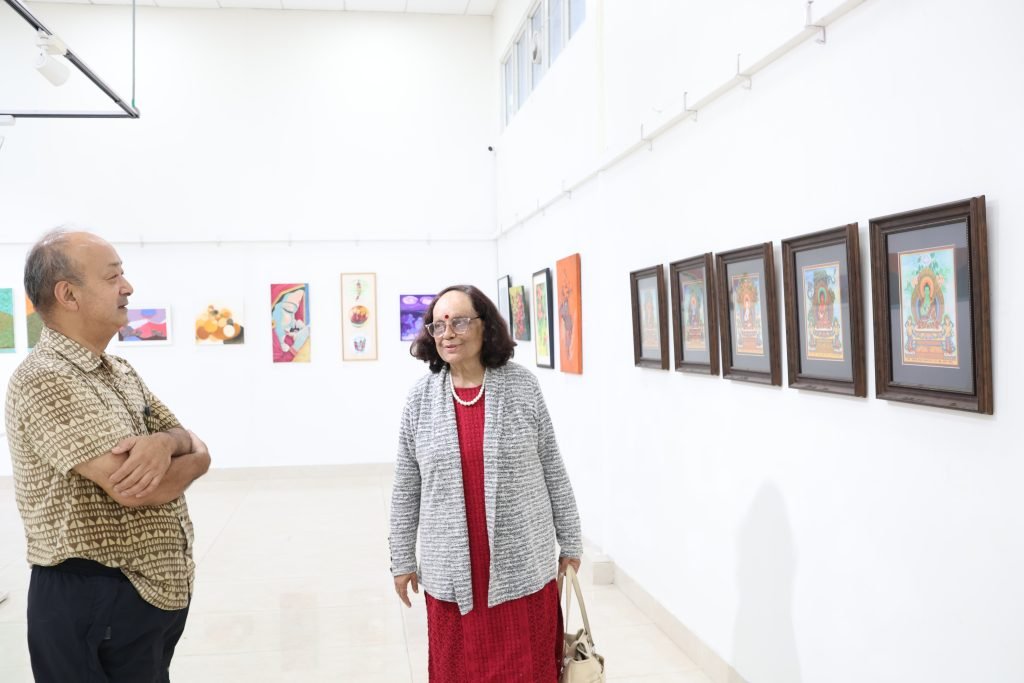
The Nepal Academy of Fine Arts (NAFA) is holding a fundraising exhibition called Arts for Humanity. It brings together paintings, photographs and sculptures, and everything raised will go toward relief for communities hit by last month’s Bhote Kosi-Trisuli flood.
Established Masters and Rising Voices
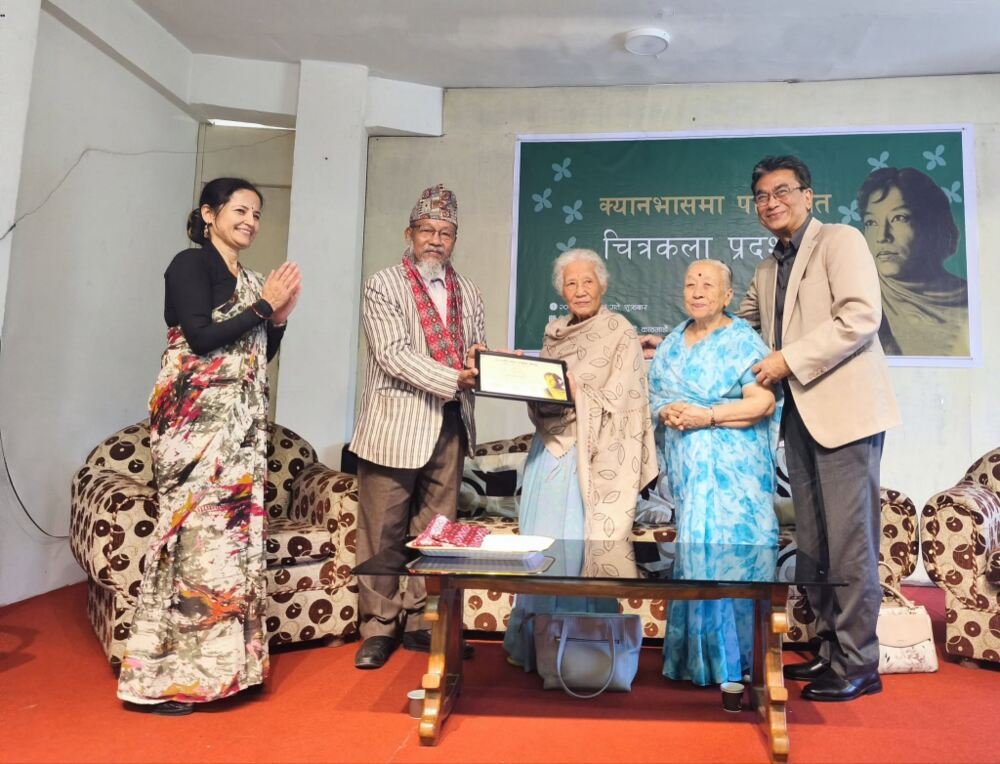
The show brings together two generations of Nepali artists. Respected names such as Thakur Prasad Mainali, Sharada Chitrakar, Mukti Simha Thapa and Vatsa Gopal Vaidya are exhibiting alongside younger artists, including Ishan Pariyar, Krishna Lama, Suman Thapa and Prakash Mijar, among others.

A Rare Chance to Own Original Nepali Art
What makes this exhibition stand out is its pricing. NAFA has placed a cap of Rs 20,000 on every artwork. Some of these pieces would normally sell for hundreds of thousands of rupees, so for seasoned collectors and first-time buyers alike, this is an unusual chance to bring home an original work by a celebrated artist.
NAFA’s Erina Tamrakar describes it as a rare moment when collecting art and acting responsibly meet in a meaningful way. A buyer leaves with a work of art, and also helps families begin rebuilding their lives.
Where the Money Goes
The fundraising model is simple. From each sale:
- 70% goes directly to the Prime Minister’s Disaster Relief Fund
- 10% goes to the NAFA artists’ welfare fund
- 20% goes to the participating artist
Many artists have chosen to give up their own share as well. For those works, the full sale value supports relief efforts and the artists’ welfare fund.
More Than Art on a Wall
Nepal’s artistic community has a long history of standing with the country in hard times, and this exhibition continues it. Here, each work becomes a small gesture of solidarity with people facing loss and uncertainty.
Visitors will find a wide range of styles and mediums, including contemporary paintings, documentary photography, sculpture and mixed-media work. Together they show how rich Nepal’s creative scene is, and how willing its artists are to give beyond their studios.
Recovery begins with practical needs like shelter, food and rebuilt infrastructure. But as this exhibition suggests, it also depends on people showing up for one another.
Visit the Exhibition
- Event: Arts for Humanity
- Dates: 5-15 October
- Venue: Nepal Academy of Fine Arts (ललितकला प्रज्ञा प्रतिष्ठान), Naxal, Kathmandu

Krishna Paksha Thapa (KANXEY) is an art lover, illustrator, and storyteller from Nepal (Now in Israel). An independent creator who loves to write and paint, he brings stories to life through sketches, words, and visual expression.