






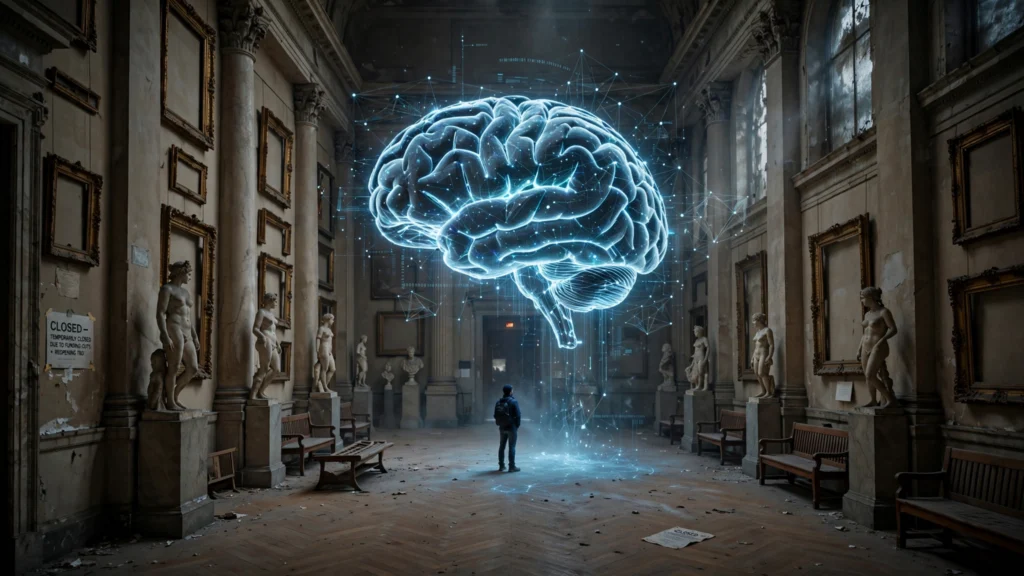












How generative artificial intelligence, demographic shifts, and decentralized structures are rewriting the rules of global labor and value creation.
The global economy stands at the precipice of its most significant transformation since the Industrial Revolution. Where earlier disruptions primarily automated physical labor, today’s convergence of ubiquitous connectivity, advanced automation, and generative artificial intelligence is redefining intellectual, creative, and service labor.
This transition is not merely about changing the tools we use to execute tasks. It is fundamentally reshaping the spatial nature of labor, the composition of the workforce, and the broader macroeconomic frameworks that sustain societies.
1. The Rise of the Synthetic Colleague: AI and Augmentation
The prevailing narrative around automation has historically swung between extreme utopianism and profound anxiety over mass obsolescence. The emerging reality is more nuanced: the shift from substitution to augmentation.
Rather than outright eliminating professions, technology is unbundling jobs into distinct tasks. Administrative burdens, data parsing, and initial drafts—both textual and visual—are increasingly assigned to automated agents. The human worker shifts from a primary producer to a director, curator, and strategist.
“The competitive edge of future organizations will not be determined by which AI models they deploy, but by how fluidly human judgment and machine intelligence interface.”
However, this transition introduces a critical economic paradox: productivity may surge while the traditional path of career advancement erodes. As foundational, entry-level white-collar tasks become automated, companies will need to invent new apprenticeship and talent-incubation models to train the senior decision-makers of tomorrow.
2. Spatial Dispersal and the Borderless Talent Market
What began as a reactive response to global crises has solidified into a structural shift. The spatial tie between location and economic output has been severed for millions of knowledge workers.
The Emergence of Asynchronous Work
The initial phase of remote work merely transported the nine-to-five office structure onto video-conferencing platforms. The next stage is fully asynchronous collaboration. Organizations are discovering that breaking work into independent, non-linear modules unlocks global talent pools spanning multiple time zones, reducing geographic friction and overhead expenses.
Micro-Economies and Digital Nomadism
As talent untethers from traditional superstar cities like London, New York, and San Francisco, capital and consumer spending are dispersing into secondary and tertiary regional hubs. Nations are adjusting rapidly, launching digital nomad visas and revised tax frameworks to attract affluent, mobile knowledge workers.
3. The Gig Economy Evolves: Platform-Based Fractional Work
The binary distinction between being an “employee” and being “unemployed” is becoming increasingly obsolete. A combination of specialized freelance networks and platform economies is creating a landscape where work is increasingly project-based and fractional.
- Fractional Leadership: Senior executives offering strategic guidance to three or four startups concurrently rather than holding a single full-time post.
- Decentralized Collectives: Autonomous groups of specialists forming ad-hoc syndicates to bid on large corporate contracts, then disbanding upon delivery.
- Micro-Monetization: Content creators, independent educators, and specialized researchers bypassing traditional corporate publishers entirely.
Macroeconomic Challenge: Modernizing the Social Safety Net
Most modern social safety nets—including healthcare, pensions, paid parental leave, and unemployment insurance—were engineered around lifelong, single-employer corporate arrangements. As the gig and freelance economy expands, policymakers face the urgent mandate to design portable benefits tied to the individual worker rather than the employer.
4. The Green Transition as an Economic Engine
The necessity to decarbonize the global economy before mid-century is shifting from an environmental compliance concern to one of the largest capital reallocation exercises in human history.
The “Green Collar” economy is not limited to solar panel installers and wind turbine technicians. It encompasses:
- Circular Supply Chain Architects: Redesigning manufactured goods to ensure end-of-life recovery and minimum waste generation.
- Carbon Accounting & Compliance Officers: Auditing corporate footprint calculations under increasingly strict regulatory regimes.
- Battery and Grid Infrastructure Engineers: Modernizing power generation and storage to support broad electrification.
This reallocation promises to offset some displacement caused by automation, shifting employment into high-demand physical, technical, and engineering domains.
5. Core Competencies: What Machines Cannot Replicate
In a world saturated with synthetic logic and infinite digital content, the half-life of hard skills will continue to shorten. A programming language or legal research technique learned today may become obsolete within five years. As a result, the value of non-fungible human traits is appreciating dramatically:
- High-Stakes Empathy: Navigating complex diplomatic negotiations, organizational change management, and clinical care.
- Systemic Synthesis: The ability to connect disparate dots across geopolitics, human psychology, design, and finance to form cohesive strategies.
- Ethical Auditing: Scrutinizing machine recommendations for bias, safety, regulatory exposure, and societal harm.
Conclusion: Shaping an Inclusive Future
The future of work is not a predetermined scenario imposed upon us; it is a continuously negotiated reality shaped by policy, corporate governance, and societal values. Technological acceleration is a constant, but whether it leads to hyper-stratification and precarious labor or elevated human fulfillment depends entirely on the institutional systems we build today.
Thriving in this nascent economy requires moving beyond defensive posturing. Workers, businesses, and governments must proactively invest in lifelong education, flexible safety infrastructures, and a deliberate synthesis between human creativity and algorithmic power.